The Customer Journey as a Driver of Growth
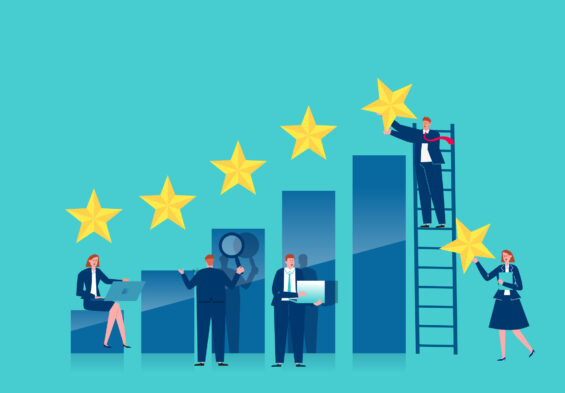
How your customers experience your brand is one of the few competitive advantages you truly control. This article explores how to transform the customer journey into a driver of sustainable growth, both internally and externally.
Key Points
- The customer journey allows you to visualize your customers’ experience beyond your internal processes.
- A well-structured customer experience becomes a powerful driver of growth, loyalty, and differentiation—and it’s one of the few advantages you truly control.
- The customer journey is a tool for internal alignment between brand experience (BX), customer experience (CX), and employee experience (EX).
- Two tools are essential for taking action: personas and customer journey mapping.
- To create a lasting impact, you need to identify friction points, moments of truth, wait times, emotions, and internal interactions that influence the experience.
You probably already have a good idea of the experience your customers go through. You know your products, services, processes, wait times, and teams. But do you truly understand the journey your customers go through, from initial contact to loyalty?
In many organizations, the customer experience is important… in theory. Everyone wants to serve customers better, offer a smoother experience, reduce irritants, and create more value. Yet, in day-to-day operations, CX often becomes a “hot potato”: it belongs to everyone, but to no one in particular.
Marketing attracts prospects. Sales converts them. Operations delivers. Customer service responds to requests. But who looks at the entire journey? Who observes the emotions, expectations, perceived risks, friction points, and the moments when the customer decides whether to stay with you… or not? That’s where the customer journey becomes a true driver of growth.
To delve deeper into the logic of sustainable growth, check out our article “From Reaction to Acceleration: Structuring Sustainable Growth in 5 Levers” It explains why growth relies not only on sales, but also on alignment, clarity, and an organization’s ability to structure its actions over time.
Why Customer Experience Is a Driver of Growth
A company’s growth is often analyzed through tangible data: sales, profitability, available resources, assets, technology, and the ability to meet market demand. These indicators remain essential for steering the organization, making decisions, and measuring performance. But they are not enough to explain what truly drives a customer to choose a company, return, recommend its services, or remain loyal to it.
In a market where products are becoming increasingly similar, where prices can be compared with just a few clicks, and where technology is constantly evolving, the customer experience is becoming one of the few competitive advantages you can truly control. You don’t always control market trends, your competitors’ decisions, or economic pressures. But you do control how your organization understands, supports, and serves its customers.
A strong customer experience goes beyond simply being courteous or fast. It is built at every touchpoint: the clarity of your website, the quality of your follow-ups, the relevance of your communications, the simplicity of your purchasing process, the consistency of your brand promise, the smoothness of your delivery, and the quality of your after-sales support.
The data confirms this, backed by hard numbers. A study published in the Harvard Business Review—“The Value of Customer Experience, Quantified,” by researcher Peter Kriss—measured this connection using two companies, each generating more than $1 billion in revenue. In the transactional model, after controlling for other factors that drive repeat purchases, customers with the best experiences spent 140% more than those with the worst. In the subscription model, the best-served customers remained loyal for an average of six years longer than dissatisfied customers.
The reverse is just as true. According to PwC’s “Future of Customer Experience” report, consumers say they are willing to pay up to 16% more for an excellent experience. And the impact is directly reflected in the results: according to McKinsey’s study “The Three Cs of Customer Satisfaction,” which surveyed some 27,000 U.S. consumers across 14 industries, maximizing satisfaction throughout the customer journey can increase overall satisfaction by about 20%, boost revenue by up to 15%, and reduce service costs by up to 20%.
But beyond the statistics lies a very concrete reality: a customer who feels understood, reassured, and well supported is more likely to return, recommend your company, and become an advocate.
To learn more about the link between credibility, visibility, and brand experience, you can also read our article “Becoming a Credible Source for AI: 5 Concrete Steps to Boost Your Digital Visibility.” Today, the way a company structures and shares its expertise also influences its ability to be found, understood, and recommended.
The pitfall: believing that the customer journey is merely a marketing tool
A common mistake is to reduce the customer journey to a marketing sequence: attract, convert, sell, follow up. The customer journey is much broader than that.
It helps us understand what the customer actually experiences before, during, and after the purchase: their needs, motivations, hesitations, frustrations, questions, and decision-making criteria. It also reveals how internal teams interact at each stage. In other words, the customer journey isn’t just about communicating more effectively—it’s about making better decisions. It helps answer essential questions:
- Where do customers lose trust?
- At what point does the experience become complicated?
- Which delays cause frustration?
- Which follow-ups are missing or too late?
- What information should be provided sooner?
- Which moments create a “wow” effect?
- What irritants prevent customer loyalty?
Without this holistic view, the company risks improving isolated parts of the experience without addressing the real problems. And that is precisely where an often-hidden pitfall lies. In McKinsey’s analysis “From Touchpoints to Journeys,” researchers report a telling case: in a new-customer onboarding process, each touchpoint, taken in isolation, had more than a 90% chance of succeeding, yet satisfaction across the entire journey dropped by nearly 40%. The touchpoints weren’t broken; it was the journey, as a whole, that was.
This is often what happens when teams work in silos. Each department optimizes its part of the process, but no one looks at the complete experience. The customer, however, doesn’t see your departments—they experience a single journey.
To explore this topic of internal roadblocks further, you can read our article “The 8 Invisible Obstacles Slowing Down Your Business.” It highlights the barriers that often prevent organizations from shifting from a reactive mode to a more structured growth model.
The Customer Journey as a Tool for Internal Alignment
The customer journey is powerful because it creates a common language. It allows marketing, sales, operations, customer service, management, and human resources teams to share a common understanding of reality. Instead of relying solely on internal perceptions, the organization asks itself: “What is the customer actually experiencing?”
This nuance is crucial, because the blind spot in perception is very real. In its study “Closing the Delivery Gap,” Bain & Company surveyed 362 companies: 80% of them believed they were offering a “superior” experience to their customers… but only 8% of those customers agreed.
At Maïeutyk, this line of thinking is part of a broader strategic framework: aligning BX, CX, and EX—that is, brand experience, customer experience, and employee experience. These three dimensions are interconnected. A strong brand promise cannot be fulfilled if the customer experience does not measure up. And a seamless customer experience cannot exist if employees lack the tools, processes, and clarity needed to serve customers effectively. This link between internal processes and the customer’s actual experience is at the heart of McKinsey’s work. Its analysis, “The Human Touch at the Center of Customer-Experience Excellence,” reminds us that excellence in the customer experience begins with internal culture and the human factor.
That’s why becoming a customer-centric company is a process that builds from the inside out. It’s not enough to simply say that the customer is at the center—the organization must be structured so that this intention is reflected in decisions, processes, follow-ups, metrics, and day-to-day behaviors.
To further explore this topic, you can read our article “An Aligned Company, a Company That Excels.” And to delve deeper into the “brand” aspect of this balance, “How to Measure Brand Experience in 6 Steps” explains how perceptions of your brand are shaped through multiple interactions—not just through your marketing communications.
The 6 Stages of the Customer Journey
Although every company has its own unique circumstances, the main stages of the customer journey often remain the same:
- Discovery: The customer becomes aware of a need, a problem, or an opportunity. Sometimes, they don’t even know yet that a solution exists.
- Consideration: They compare, search, consult, read, ask questions, and try to understand the options available to them.
- Purchase or Conversion: They’re ready to take action but may still hesitate. Perceived risks, price, offer clarity, and process simplicity play a major role here.
- Post-Purchase or Delivery: The customer discovers whether the promise is actually fulfilled. This stage strongly influences satisfaction, trust, and the perception of value.
- Retention: If the experience is positive, the customer may return, buy more, recommend the company, or commit to a more long-term relationship.
- Reactivation: A former or inactive customer can be effectively re-engaged, provided their history, needs, and context are understood.
What varies from one company to another is not so much the stages themselves as their intensity, duration, the number of stakeholders involved, the level of risk, operational complexity, and the emotions experienced by the customer. In B2B, the journey can be lengthy, involve multiple decision-makers, and require numerous follow-ups. In B2C, certain decisions are made more quickly but are strongly influenced by trust, reviews, the digital experience, and the perception of value.
The customer journey thus becomes both an analysis and a prioritization tool. By drawing on the key pillars of customer experience, namely strategy, customer understanding, design, measurement, governance and culture, it helps align teams around a shared vision and identify the most relevant actions to improve the experience delivered.
TOOL #1
The persona
The persona allows us to move beyond a overly general view of the customer. It’s not just used to describe a demographic profile or a market segment; above all, it helps us understand the needs, motivations, hesitations, decision-making criteria, and pain points that influence customer behavior at every stage of their journey.
This understanding is essential, because a single request can mask very different underlying issues. When an organization expresses a need for support in marketing, sales, or customer experience, the real issue may be broader: stagnant sales, unclear positioning, misaligned teams, difficulty explaining the offering’s value, or unstructured growth.
The persona therefore allows us to better interpret what lies behind the expressed requests. It helps tailor communications, offers, follow-ups, sales tools, content, training, and improvements to the customer experience.
This level of nuance is now an expectation, not a luxury. Customers want to be understood, recognized, and supported in a relevant way throughout their journey. When a company fails to take their specific needs into account, the experience can quickly become impersonal and lead to frustration. To lay this foundation, our article “Segmentation, Target Market, and Personas: Three Pillars of Marketing Strategy” explains why personas are often an essential first step in understanding a typical customer’s expectations.
TOOL #2
Customer Journey Mapping
Mapping the customer journey allows you to visualize the experience at each stage. It goes beyond simply mapping out a process; it enables you to analyze several elements simultaneously:
- the customer’s actions;
- the customer’s emotions;
- perceived risks;
- internal interactions;
- friction points;
- timelines;
- moments of truth;
- Opportunities for improvement.
It is often at this stage that the most important insights emerge. One customer may be very interested in your offer but drop off because the quote request process takes too long. Another may be ready to buy but hesitate because the information on your website lacks clarity. Yet another may be satisfied with the product or service but disappointed with the post-delivery follow-up.
These pain points don’t always show up in financial metrics. They become apparent when you look at the customer journey from the customer’s perspective, considering what they’re trying to accomplish, how they feel, and the obstacles that hinder their progress.
Mapping also helps identify “moments of truth”: those points where the experience can shift the customer’s perception: a first call, a clear quote, proactive follow-up, a well-explained delivery, a quick response to a concern, or post-purchase support. Not all of these moments carry the same weight, and their impact varies. According to McKinsey, a negative experience has a relative impact four to five times greater than a positive one. Protecting these moments, often where human interaction remains irreplaceable, is therefore a strategic priority.
To better prioritize the actions identified through this mapping exercise, you can read our article “Prioritize, Decide, Act: Tools for Moving from Idea to Impact.” It presents concrete tools for transforming an analysis into a measurable action plan.
The pitfalls that prevent the customer journey from driving growth.
Even with the best intentions, certain mistakes often recur.
- Mapping the journey without taking action. The exercise then becomes interesting but of little use. Effective mapping must lead to concrete decisions: which pain points to address, which moments to enhance, which follow-ups to automate, which tools to create, and which teams to train.
- Confusing automation with customer experience. Automation can be very useful, but only if it truly simplifies the customer’s life.
- Focusing only on external touchpoints. The journey is also influenced by internal factors: handoffs between teams, the tools used, response times, poorly defined responsibilities, and information lost between departments.
- Failing to measure the experience. If the organization tracks only sales, costs, and timelines, it overlooks essential metrics such as satisfaction, trust, clarity, customer effort, loyalty, and referrals.
- Believing that the customer experience is the responsibility of a single team. In reality, it belongs to the organization as a whole.
Shifting from firefighting mode to strategic mode
Many companies care deeply about their customers but feel like they’re constantly in firefighting mode. They respond to emergencies, fix problems as they arise, compensate for irritants with goodwill, and often rely on a few key individuals who know how to “make things work.” However, this approach has its limits.
The customer journey allows us to take a step back. It helps us shift from a reactive mindset to a proactive one. Instead of asking, “How can we fix this problem quickly?” the organization asks, “Why does this problem keep coming up, and how can we improve the journey so it doesn’t happen again?”
It is this shift that transforms the customer journey into a driver of growth. It’s not just about improving service, it’s about better structuring priorities, clarifying responsibilities, training teams, reinforcing the brand promise, and creating a more consistent experience. To learn more, check out our article “From Firefighter Mode to Strategist Mode: How to Attract Better-Aligned Customers.” It specifically addresses this transition from constant reaction to more intentional growth.
Summary: How to Use the Customer Journey as a Growth Engine
Here are the steps to transform your customer journey into a growth lever:
- Clarify your persona: Who are you actually serving? What are their needs, expectations, pain points, and decision-making criteria?
- Map out the key stages of the journey: From discovery to reactivation, what stages does your customer go through?
- Identify friction points: Where does the customer hesitate, wait, doubt, or become discouraged?
- Pinpoint moments of truth: Which moments have the greatest impact on trust, satisfaction, and loyalty?
- Observe internal interactions: Which departments, tools, or processes influence the customer’s experience?
- Prioritize improvements: Which actions will have the greatest impact on the experience, growth, and internal alignment?
- Measure and adjust: Which metrics will help track progress and ensure continuous improvement?
If a step reveals a misalignment between your brand promise, your customer experience, and your employee experience, it’s not a failure—it’s an opportunity to better structure your growth.
Take Action
The customer journey isn’t a document you create once and then file away. It’s a living tool. It allows you to see your company through your customers’ eyes and better understand what your teams go through to deliver that experience.
You can start simply:
- choose a priority persona;
- identify the key stages of their journey;
- note the questions, emotions, and pain points at each stage;
- identify moments where the experience can be improved;
- prioritize one or two concrete actions for the coming months.
The most important thing isn’t to transform everything immediately, but to start looking at your growth differently. Because ultimately, the customer journey isn’t just about selling better, it’s also about better understanding, better aligning, and better delivering on your promise.
Assess Your Alignment
If you’d like to identify areas of misalignment that are slowing your growth, you can complete our free online diagnostic. It will help you evaluate the level of alignment between your brand experience, customer experience, and employee experience, so you can identify the most relevant actions to move from intention to impact.
Category
Share